30 September 2021, in the gardens of the Élysée Palace. Emmanuel Macron is receiving young people who have inherited the memories of the Algerian War. Reconciliation is on the agenda. Then the president utters a sentence that unleashes a host of controversies: “Was there an Algerian nation before French colonisation?” Four years earlier, as a presidential candidate, he had called colonisation a “crime against humanity”. Now, as president, he wonders whether the country existed before it was colonised.
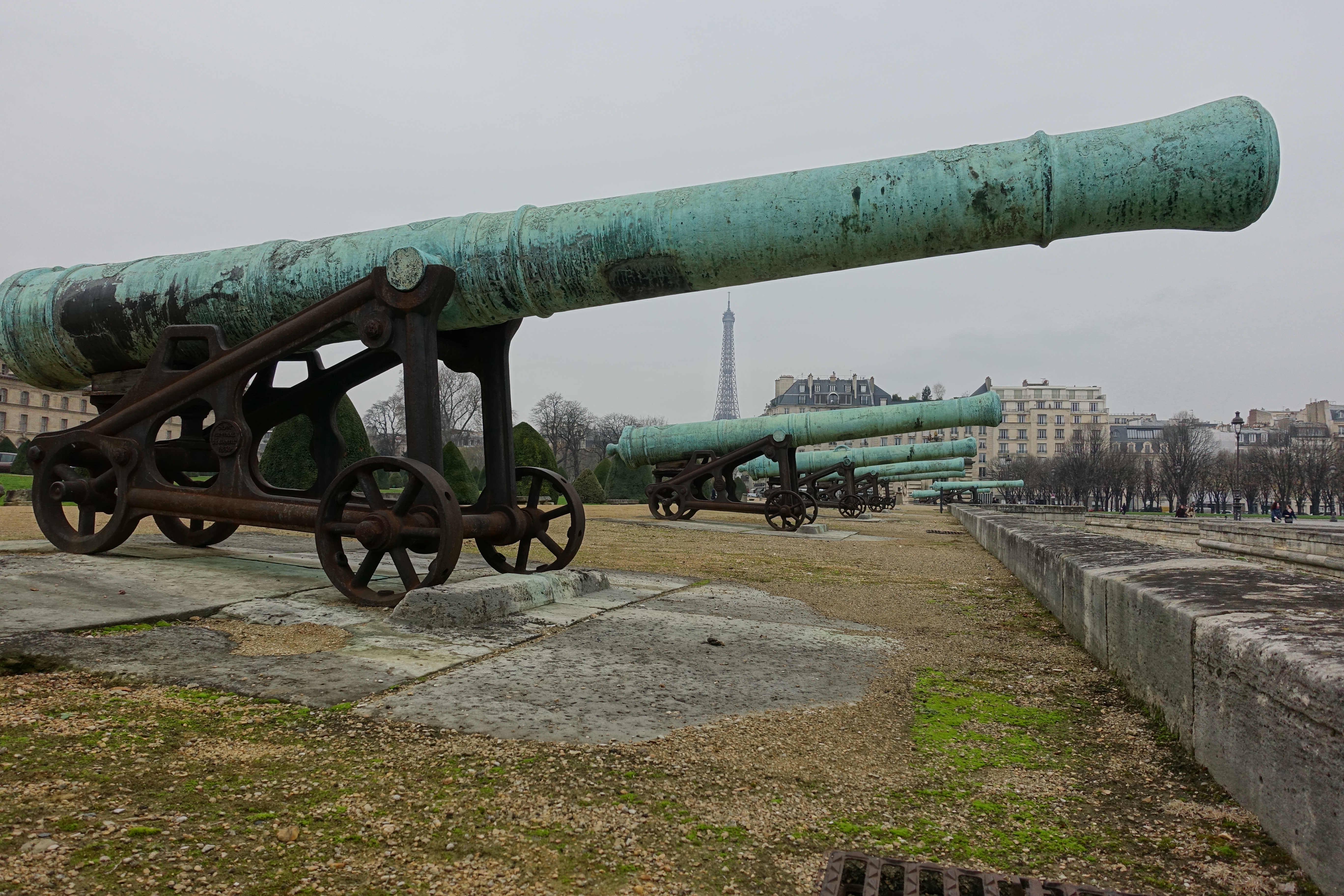
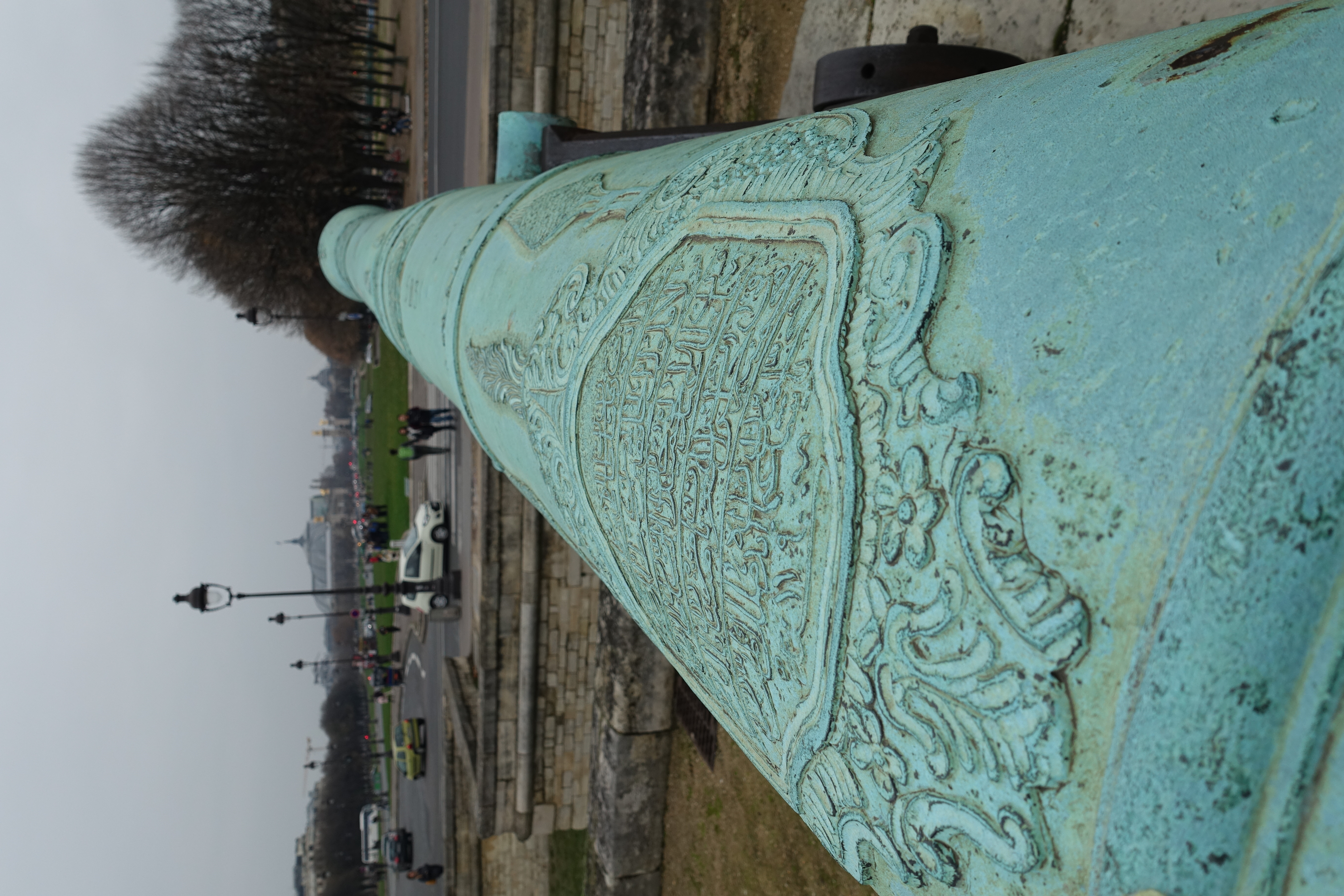
Had I been there, I would probably have been tempted to answer with a little blow from a fan, like Hussein Dey’s. But the archives offer a more powerful response than that gesture: French consuls in Algiers, treaties with the United States, even the name “El Djazaïr” engraved on cannons looted in 1830 and displayed at Les Invalides. There is no shortage of evidence. One must, however, be willing to read it.
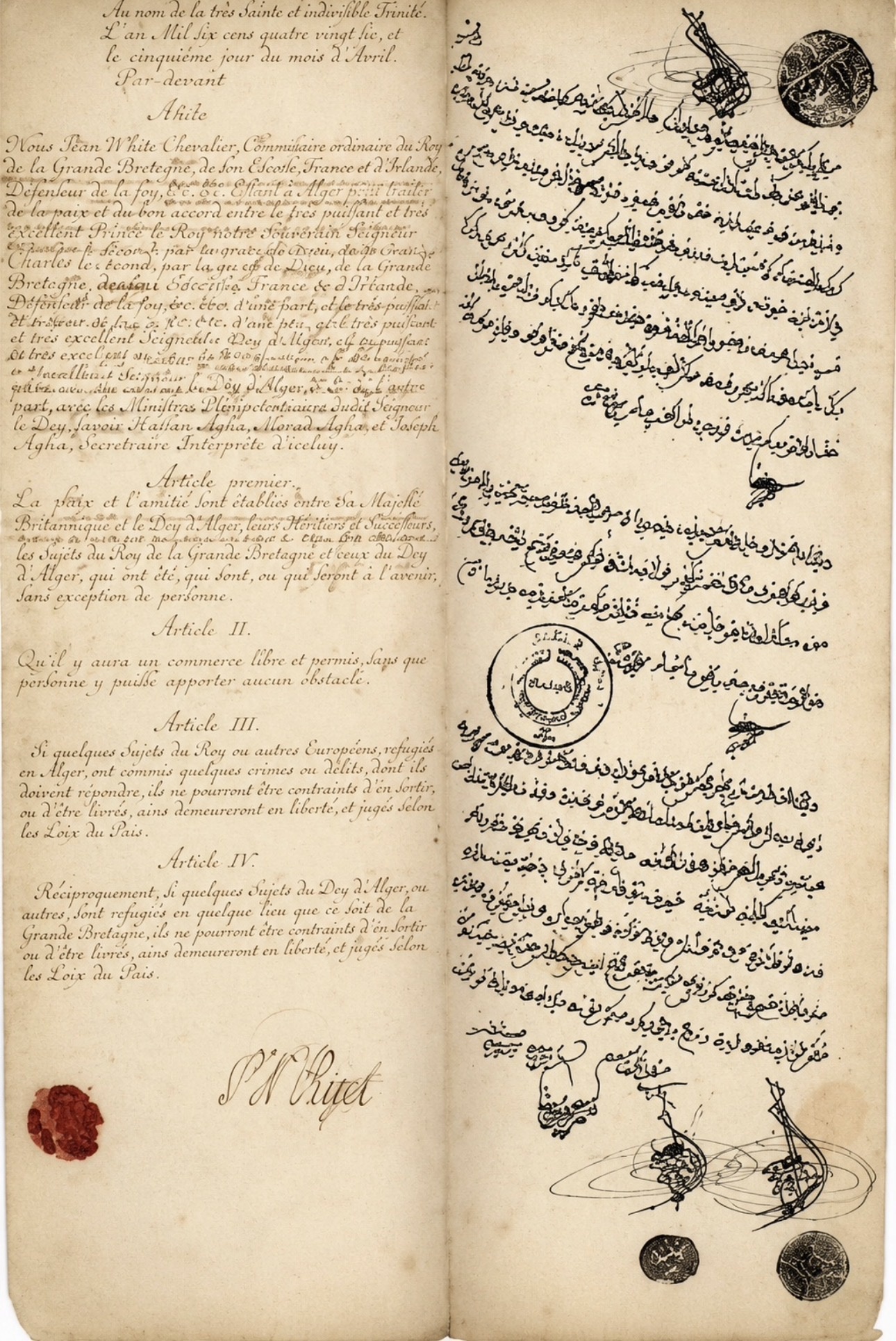
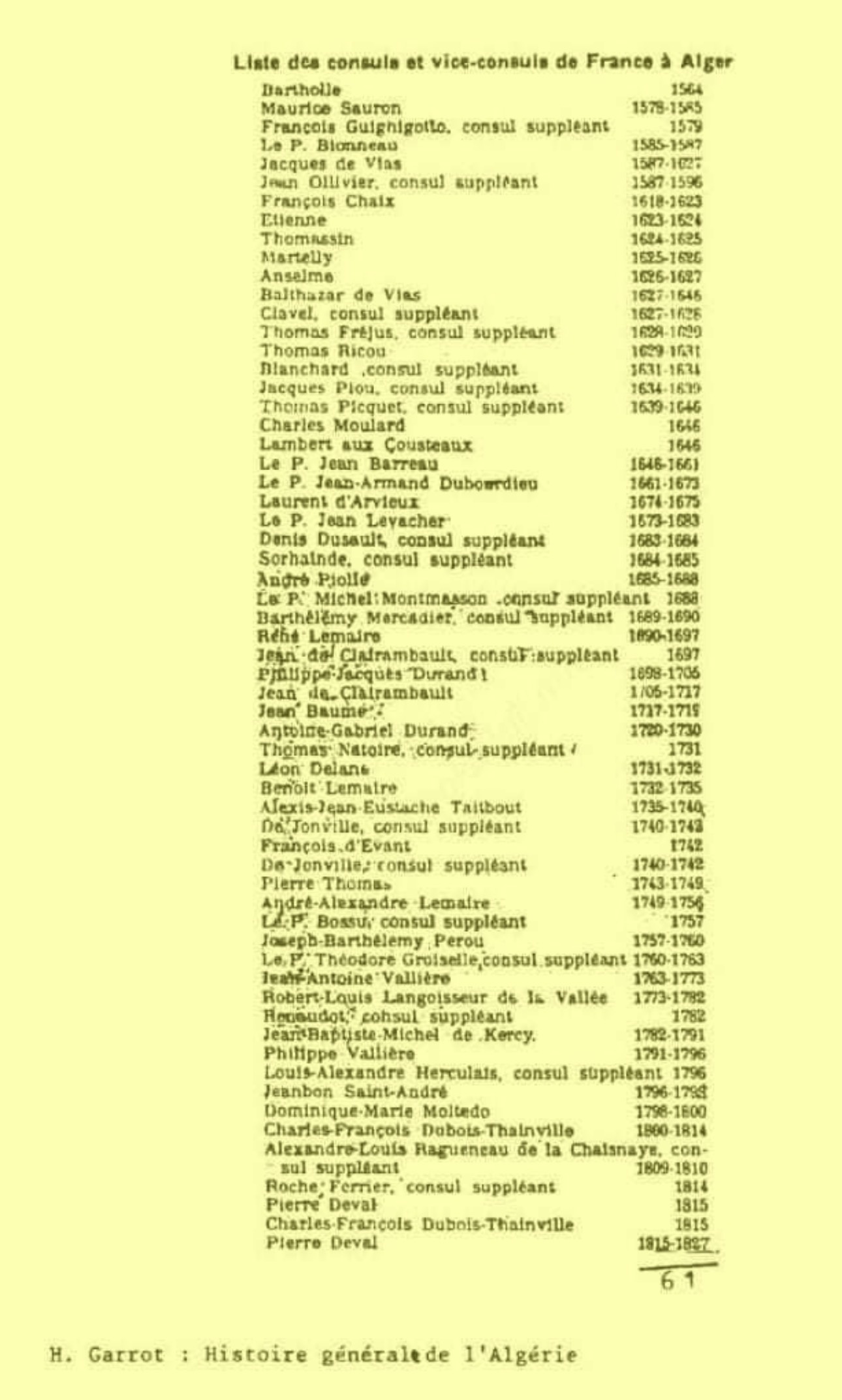
PORTFOLIO — Algiers before 1830: three archival documents
1 — A treaty between states, 1686
2 — France had consuls in Algiers long before 1830
3 — “El-Djezaïr” engraved in bronze
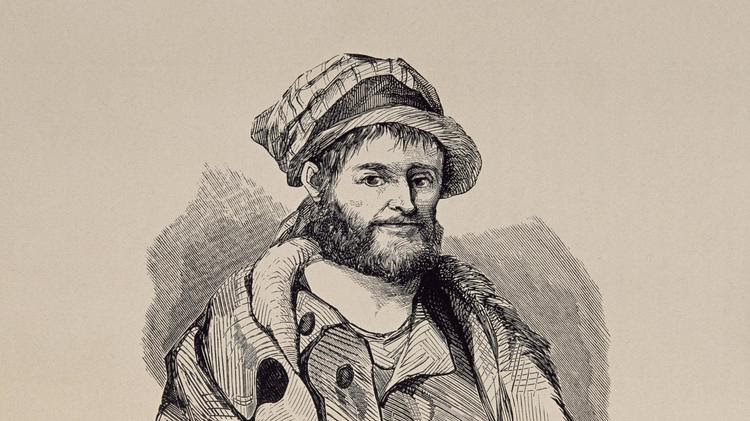
Instead, let me tell you the story of Selim. An educated, multilingual, refined man from Algiers. Far more cultured than Brigitte Macron’s young husband. Captured by Frenchmen, enslaved, taken to America and held among Native Americans, he still finds the strength to escape. When Virginia discovers this man, the United States does not yet exist. He comes from Algiers. His journey is extraordinary enough to need no legend. A letter from John Blair, acting governor of Virginia, dated 12 July 1768, attests to its main stages; it will guide our reconstruction of its defining scenes. Americans called him Selim the Algerine. Selim the Algerian.
Algiers, around 1755
The dawn prayer has just ended. The sun rising behind the hills reaches the bay. Seen from the sea, Algiers is a white mass clinging to the hillside ↗. Its tightly packed houses rise in tiers towards the walls of the citadel. Below, almost at the water’s edge, the city gathers around its harbour, markets, mosques and public buildings.
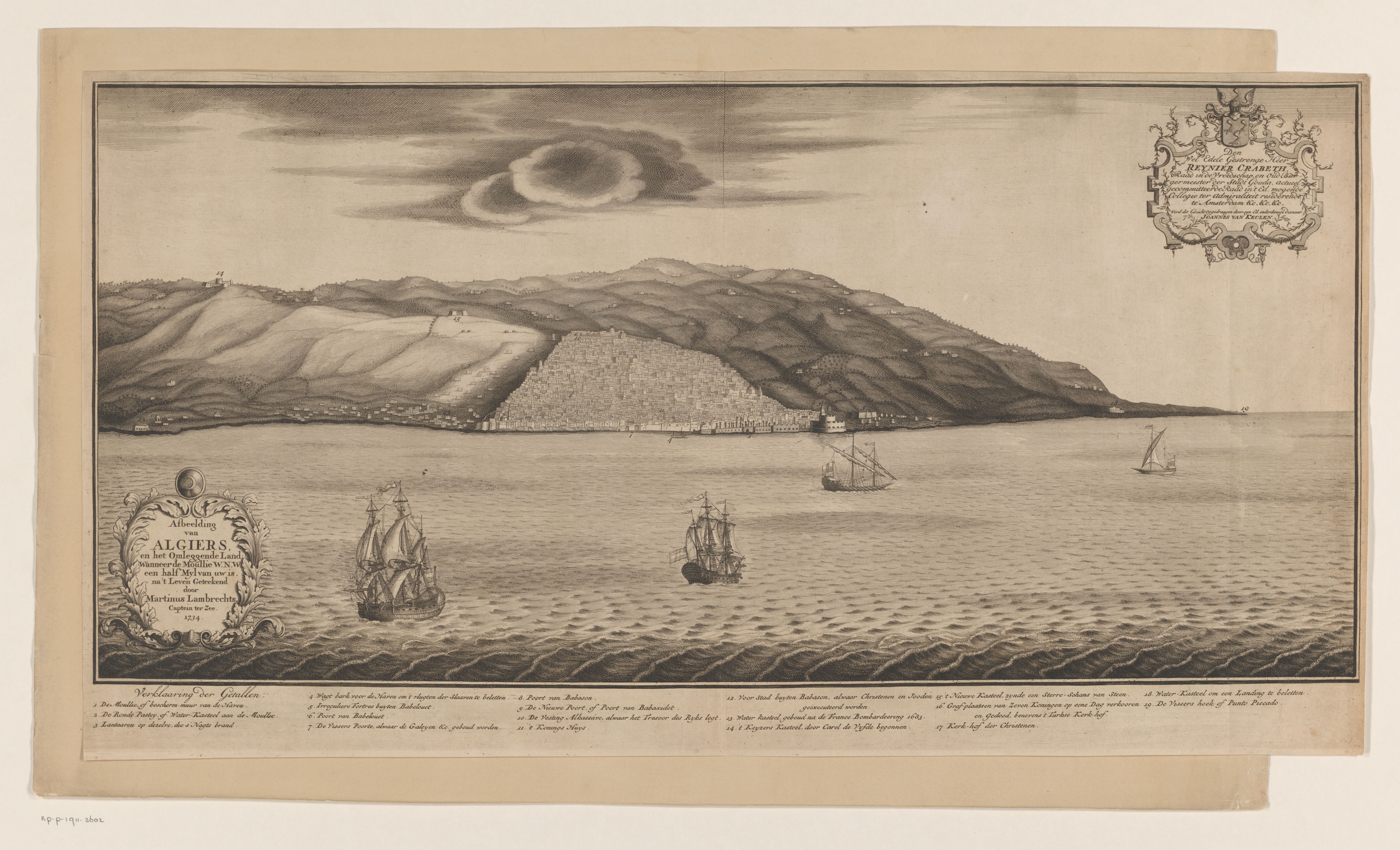
Djama el-Kebir, the Great Mosque, has watched over the capital for several centuries. A few steps away stands Djama el-Djedid. In the lower town, the dome of the Ali Bitchin Mosque rises above the rooftops. Further on, the Jenina houses the seat of power. There are the Bayt al-Mal, the courts, Dar al-Sikka, where coins are minted, and the fondouks, where merchants stay.
Algiers is already awake. In the kouchas, the bakeries, men from Djidjelli knead the bread. Mozabites run the mills and open the butcher’s shops and bathhouses. In the gardens of the Fahs, Kabyles are already at work. Children are already on their way to the madrasa. Through Bab Azzoun come goods from the interior: grain, oil, wool, wax, hides. On the quays, porters load and unload. At the Tarsana, the Regency’s arsenal, carpenters work on the ships of the fleet.
In the roadstead lie ships from Tunis, Alexandria, the Levant, Livorno, Marseille and other Mediterranean ports. One hears the Arabic of Algiers, Berber, Turkish, Italian, Spanish and French. Foreign merchants trade in the city. European consuls live there. At nightfall, men from Biskra will stand guard in the streets.
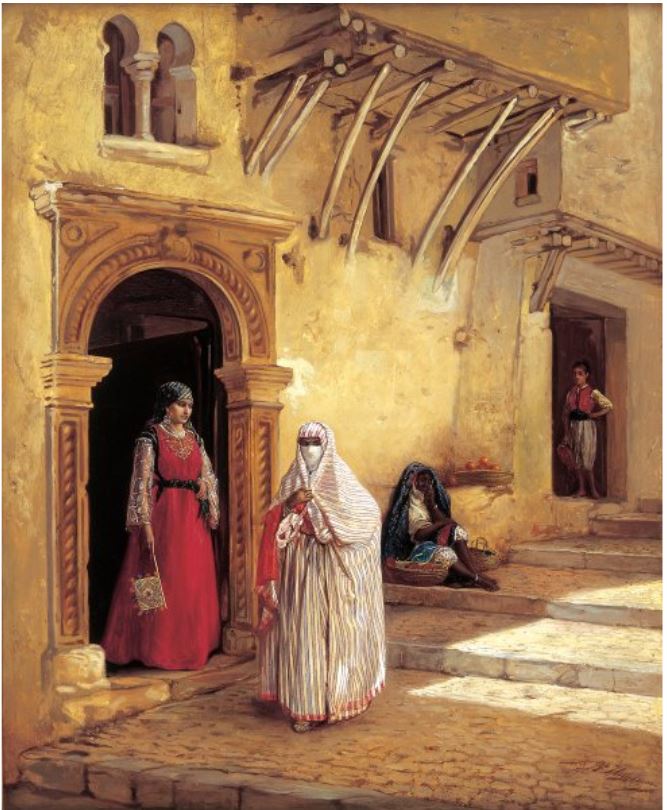
This is the world in which Selim grew up. That morning, amid the bustle of the harbour, a family accompanies the young man to the quay. Selim is leaving for Istanbul. He is not a child being sent away to learn his first letters. According to the earliest tradition, he belongs to a prosperous family and has already received a sound education. His father wants him to go further. Istanbul is then one of the great intellectual capitals of the Muslim world. Around Fatih and Süleymaniye stand some of the Empire’s most prestigious madrasas.
Along the shores of the Golden Horn also live the great Greek families of the Phanar, who will provide interpreters and dragomans for the Porte. Large Jewish communities have their own schools and scholars. In this imperial city, languages and learning meet.
His mother probably knows all this. But she thinks above all of the sea, the distance, the weeks without news, the storms, the illnesses. Of ships that sometimes never return. On the quay, she holds her son in her arms. For a long time. His father stands beside them, more restrained, doubtless torn between pride at seeing him continue his studies and the anxiety that any journey inspires in those days.
Before departure, prayers were said. Now all that remains is to entrust Selim to God. His mother finally releases her embrace. He boards the ship. The mooring lines are cast off. The vessel slowly draws away from the quay while his parents stand motionless. Their figures grow smaller. Algiers recedes. His mother does not yet know that she will never see her son again.
Istanbul
A few weeks later, another world appears: the Golden Horn, the Bosphorus, domes, palaces, minarets thrusting like spears into the sky, and quays crowded with ships from the Mediterranean and the Black Sea. Selim continues his education around Süleymaniye, one of the pinnacles of the Ottoman system of higher and religious learning. The capital brings together officials, jurists, religious scholars, physicians, interpreters, diplomats and merchants. He reads, listens to his teachers and moves through this learned world, where Arabic, Turkish and Persian meet from one neighbourhood to the next.
It is probably here that he learns Greek and Hebrew, which will astonish Virginia’s leading men years later and thousands of kilometres away. For now, he does not imagine that his future will take him to America. The years pass. Then Selim puts to sea again.
The Mediterranean
The day had begun like any other. Wind, sails, an almost empty sea. Then a man spots a ship on the horizon. A few minutes later, it is still there. And it is drawing closer. The raïs, the captain, watches. The unknown ship has just changed course. It is coming towards them. Orders ring out. The sailors rush to manoeuvre. They try to gain speed. The other vessel does the same. The distance narrows. Its flag can now be made out. French.
The first cannon shot rings out. The ball falls into the water. A warning. A second shot strikes the rigging. Wood splinters. Ropes crash onto the deck. The ship slows. The French vessel is not trying to sink its prey. It wants to capture it. Grappling hooks bite into the wood. Ropes tighten. The hulls draw together. The first men clamber over the bulwark. Muskets, pistols, sabres. Smoke fills the deck. The fighting is fierce but brief. Weapons fall. Selim is among the survivors. Only minutes earlier, he was still a young Algerian travelling across the Mediterranean. He is now a prisoner of the French.
Steeped in the colonial narrative, little Emmanuel, like so many of his fellow citizens, cannot conceive of this. In the simplified history recited by the ignoramuses of the media and political worlds, the “Barbary corsairs” captured Christians, Algiers enslaved Europeans, and civilised Europe was cast as the victim.
Yet corsair warfare was practised on both shores of the Mediterranean. With one difference: when Muslim captives were neither freed nor exchanged, they ended their lives on a galley. Among European captives who converted to Islam, a form of “meritocracy” could sometimes take them to the very top. The Italian Aldo Piccinin, also known as Ali Bitchin, became one of the leading commanders of the fleet of Algiers; the Dutchman Jan Janszoon van Haarlem, also known as Mourad Raïs the Younger, likewise became a grand admiral. Selim, of course, knows nothing of the controversies that will surround his story two centuries later. He is a captive, and his route now leads west.
The Atlantic and New Orleans
Gibraltar finally disappears, then the Mediterranean itself. Before Selim opens a sea he had probably never imagined crossing. The Atlantic. Days become weeks. The rolling of the ship, the wind, water everywhere. Selim is no longer the student from Algiers sent to study in the imperial capital. He is a prisoner being transported by Frenchmen to a continent about which he probably knows almost nothing.
One morning, a line appears on the horizon. Land. The vegetation is different, the air heavier, the heat humid. Immense waterways stretch inland. America. New Orleans is still young. A few streets, wooden houses, warehouses, muddy quays. Selim steps ashore. No one is waiting for him. No Algerian consul, no representative of the Regency, no treaty to invoke. He is a nameless captive in a slave-trading port.
The letter John Blair will send to London several years later says almost nothing about this stay. It merely states that French traders took Selim into the continent’s interior, among the Mingos, and left him there a prisoner. Later accounts fill in the route: the Mississippi, then the Ohio. Ever further from Algiers.
Among the Mingos
Here the archives fall almost entirely silent. They tell us neither which village Selim was taken to, nor which family he lived with, nor how he was treated. They say nothing of faces, gestures, meals or seasons. They record only: prisoner. And three years. Three winters beside the Ohio. Three springs watching an unfamiliar land turn green again. Three years during which the man from Algiers had to learn to recognise other plants, other animals, other sounds. Perhaps a few words of an Iroquoian language. Perhaps more.
It would be easy to turn this silence into a novel, to give Selim conversations no one heard, friendships no one recorded, ordeals no one can establish. His life is extraordinary enough already. Let us not add a legend to it.
Yet one presence emerges in the account: an English woman, also held among the Native Americans. Selim does not speak her language. She speaks neither Arabic nor Berber. They communicate through signs. She points him in a direction. East. Selim has studied geography. He knows that the English colonies lie on the other side of the mountains, towards the Atlantic coast. He does not need a map. The sun will be enough.
Towards the rising sun
One day, Selim disappears. No account explains how he evades his guards, what he takes with him, or exactly when his escape begins. John Blair’s letter gives only one figure: forty-five days. For forty-five days, Selim walks east. Each morning, he sets off again towards the rising sun. Before him lie roadless forests, unbridged rivers and mountains whose names he does not know. He has neither a gun nor provisions. He feeds on herbs, roots and wild fruit, drinks from streams and seeks shelter beneath the trees at night.
Then come the Appalachians. Slopes, rocks, torrents, rain, cold. His clothes tear. His shoes are gone. He wraps his feet in scraps of cloth so that he can keep walking. Algiers lies thousands of kilometres behind him. Ahead, he does not know exactly what he will find. English people, he hopes. Perhaps a town, a port, someone willing to hear his story. First, though, he must get out of the forest alive. His strength wanes. Each day’s journey is shorter than the last. He stumbles, gets up and moves on. Then, one day, he can no longer get up.
The man in the tree
The scene unfolds on the frontier of colonial Virginia, in territory that is now part of West Virginia. A hunter ventures into the woods. Local accounts will later give him a name: Samuel Givens. His dogs suddenly begin barking at the hollow trunk of a fallen tree. Something is moving inside. The hunter shoulders his gun. He thinks he has flushed out an animal. Then he approaches. It is not an animal. It is a man.
He is almost naked, emaciated, covered in wounds and scratches. A few scraps of cloth still wrap his feet. His body bears the marks of weeks of wandering. The hunter lowers his gun. He speaks. The man sheltering in the tree answers him. Neither understands a word of the other’s language. Givens gives him food, only a little at first, fearing that his exhausted body cannot bear more. For several days, he feeds him and waits until he has regained enough strength to sit on a horse. The stranger is then taken to Captain Dickinson, a leading figure on this Virginia frontier.
He is given a roof, clothes, food. And time. For several months, Selim listens, watches, repeats and learns English with the same diligence he once brought to Greek and Hebrew. Gradually, he becomes able to tell his story. He gives his name, his city, his country. He tells of Istanbul, the French ship, the Atlantic, Louisiana, the Mingos, the English woman and the forty-five days walking towards the rising sun. Thousands of kilometres from the Bay of Algiers, someone can finally understand what happened to him. Selim the Algerian has emerged from the forest. He has also entered American history.
Williamsburg
Selim reaches Williamsburg, the capital of colonial Virginia. His appearance intrigues, his story astonishes, his learning impresses. He speaks of his education in Istanbul and demonstrates his knowledge of Greek and Hebrew. The man found almost naked in a tree a few months earlier now stands before the colony’s most prominent figures.
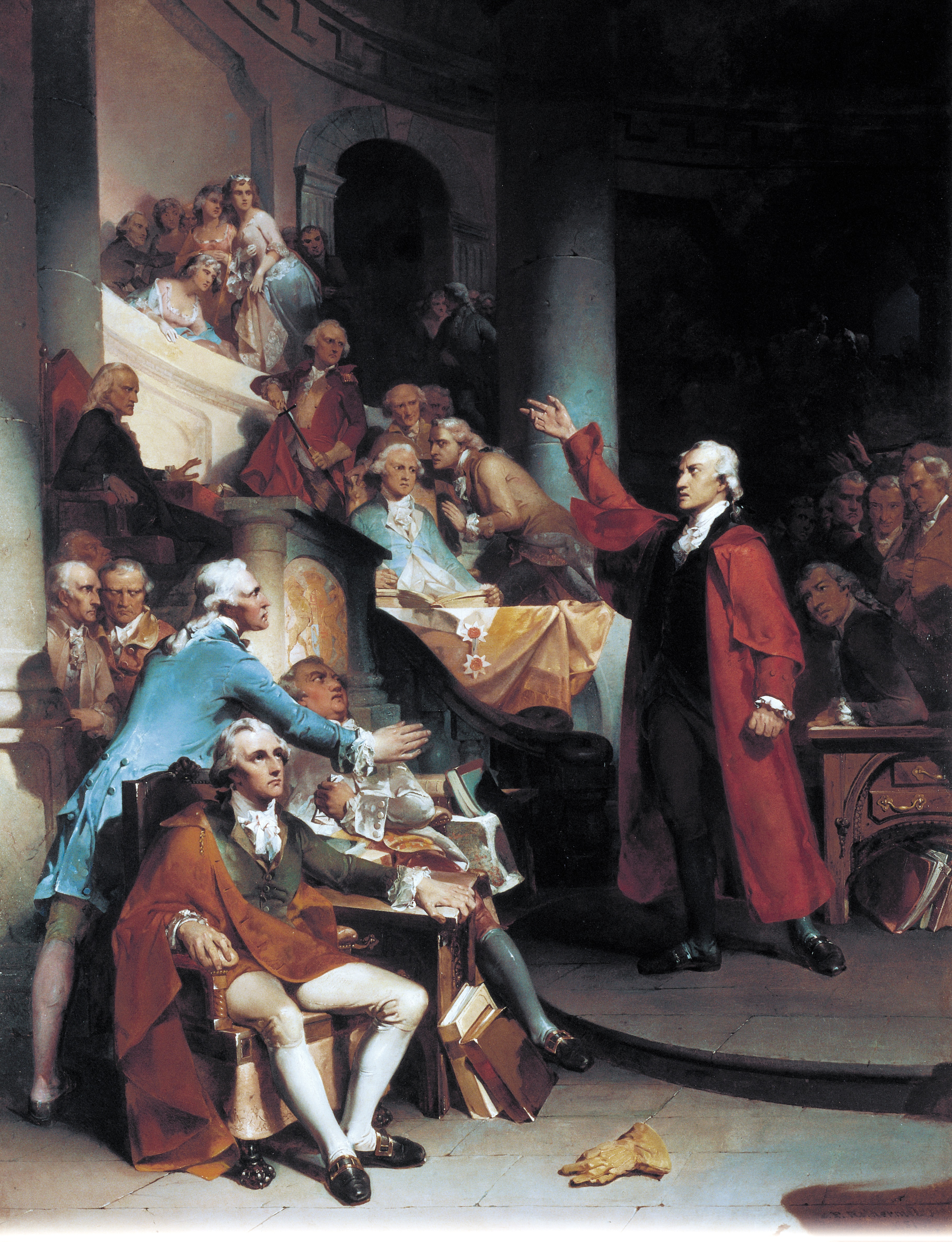
His story reaches John Blair, then acting governor of Virginia. On 12 July 1768, Blair writes to the British Secretary of State for the Colonies. This letter is the key document in the case. Blair describes Selim’s Algerian origins, his capture by Frenchmen, his detention among the Mingos, his escape and his wish to return to his country. The Virginia Council agrees to pay for his passage to London so that he can continue his journey to Algiers.
The trail goes cold
That is all that is established. Selim is Algerian. Educated. Multilingual. Captured by Frenchmen, taken to America, held for three years among the Mingos. He escapes, crosses the Appalachians and reaches Virginia after forty-five days on foot. He learns English, reaches Williamsburg and impresses people with his learning. In 1768, the Virginia Council pays for his passage to London so that he can return to Algiers. Did he board a ship? Did he reach England? Did he see his country and his family again? We do not know.
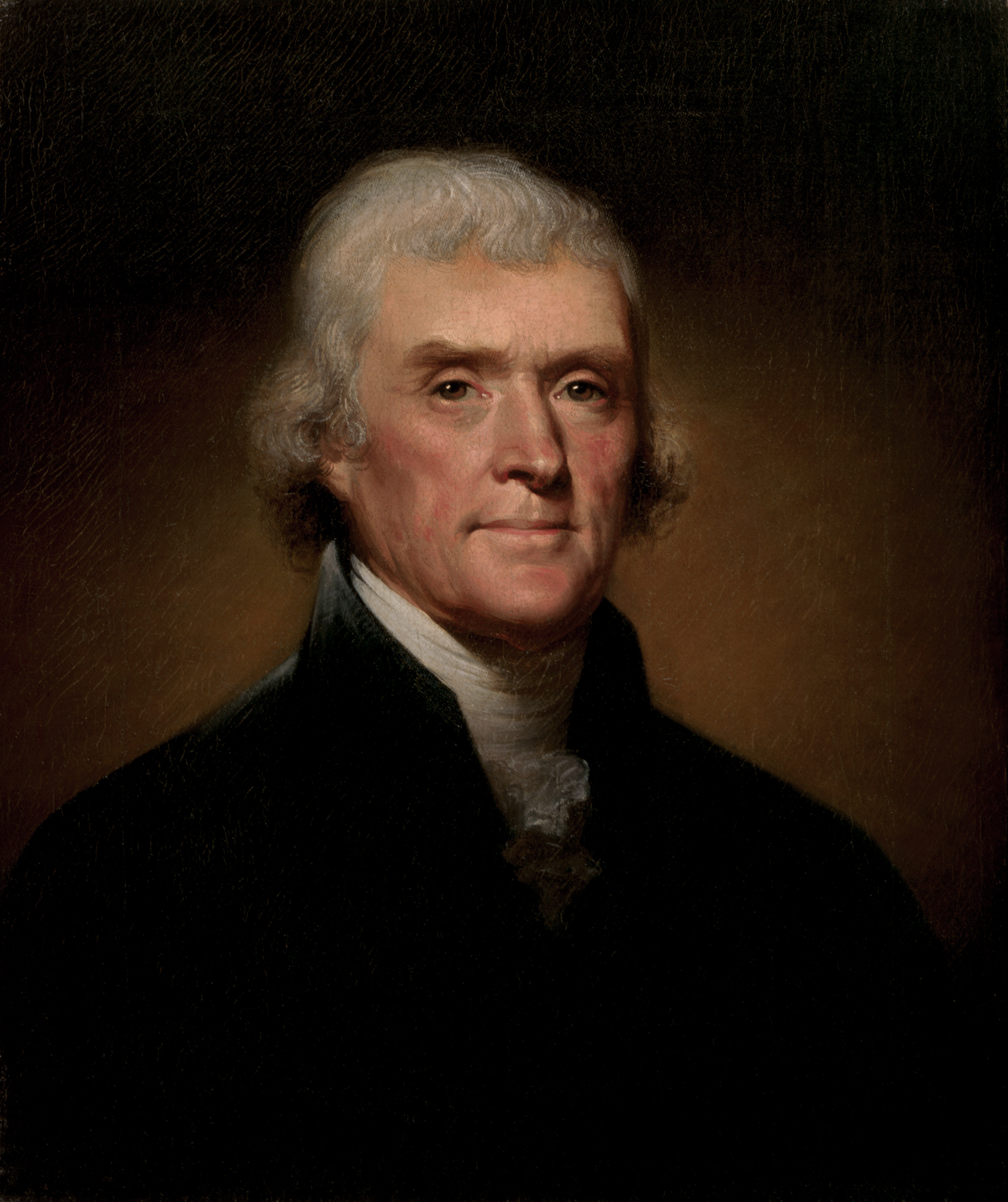
Nor do we know whether he actually met Jefferson. He may have crossed his path, since he associated with people in Jefferson’s circle, but nothing establishes that he did. Nor do we know whether Selim might have prompted the future American president, who owned a translation of the Quran, to take an interest in Islam. There is no evidence to support that hypothesis.
Missionary accounts written several decades later claim that he converted to Protestantism, returned to Algiers, was disowned by his father and lost his reason as a result. The Muslim convert, rejected by his own people, driven mad: the construction of this fable is all too plainly designed to promote religious conversion. The colonial narrative turns the Muslim into a savage. The missionary narrative prefers to convert him. In both cases, others take possession of Selim’s life story. John Blair’s letter establishes what we can tell. Beyond that, the archives provide no answer.
Ethnocide
The silence surrounding Selim’s final years raises a broader question: where can one look for Algerian traces of an Algerian story when the colonial power has scattered the country’s archives, confiscated its manuscripts and set about rewriting its past as though nothing had existed before? Colonisation does not merely mean stealing a land. It also means stealing from its people the proof that they existed before your arrival. Their institutions are destroyed, their languages despised, their schools closed, their libraries scattered, their manuscripts taken away, even the inhabitants themselves renamed. There is a word for this: ethnocide.
In 1830, France does not land on a deserted beach. It seizes a fortified capital, a government, courts, a currency, a diplomatic service and several centuries of archives. The Treasury of Algiers is looted — Pierre Péan told that story in Main basse sur Alger ↗. Public buildings are occupied, mosques desecrated, records scattered and manuscripts sent to France. Then the colonial power renames streets, towns and squares. It turns people into “natives” on the land of their ancestors and tells them that, before France, they were nothing.
The method is simple: steal the evidence, then demand the evidence. And when independence comes, “confiscate” their archives and force their historians to cross the Mediterranean to consult them. The OAS did not confine itself to carrying out the deadliest attacks of the War of Liberation: on that fateful 7 June 1962, it literally burned Algeria’s memory by setting fire to the library of Algiers.
Among those papers, was there a letter announcing Selim’s return? A request sent to the dey from London? A register recording the disappearance in the Mediterranean of a young man from Algiers who had gone to study in Istanbul? Letters from a family who had waited for years for a son who never came home? Perhaps. We may never know.
Back to the Élysée
The children of the OAS, eager to avenge their parents, have found at the Élysée a president who fans conflicts over historical memory like an apprentice arsonist. Let us return, then, to his provocative question: “Was there an Algerian nation before French colonisation?”
But which Algeria is Emmanuel Macron talking about? The one with a fortified capital, a government, courts, a Treasury, a currency and an administration? The one that maintained diplomatic relations with foreign powers, hosted their consuls and would soon conclude treaties with the United States? Or the one whose son, Selim, was already identifying himself as Algerian in British Virginia before the United States even existed?
A PROFILE BY
Saïd Labidi
Loading…