“Odrab w ahrab” — “shoot and get away”. This is how the actions of the mujahideen are sometimes summed up: lay an ambush, strike the colonial army, then disappear into the mountains. That image belongs to the history of the war of liberation. But it leaves another dimension of the Revolution in the shadows: the level of organisation and sophistication achieved by the National Liberation Army, the ALN, which could carry the struggle well beyond armed engagements. And even beyond the diplomatic front.
We need to grasp what the adversary represented. The Foreign Legion was a battle-hardened force, deployed in the most demanding operations. Its discipline, esprit de corps and reputation seemed to make it difficult to weaken. Yet behind the uniforms were men from different countries, with different reasons for having enlisted. Loyalty to the Legion did not necessarily mean a commitment to keeping Algeria French.
It was in that gap that leaders of the Revolution sought room to act. A fighter could be reached by means other than gunfire. They could speak to him in his own language, understand what kept him in the ranks and show him that another life was still possible. But a promise alone was not enough to make him risk desertion. Someone had to be waiting at the end of the road.
The operation’s boldness lay in this ambition: to counter the French military command with an organisation capable of taking responsibility for a man from the moment he fled until he arrived home.
An idea born of several wars
The man who would give this undertaking a face was Winfried Müller. Born in Wiesbaden in 1926, he had lived through Europe’s upheavals before encountering the Algerian cause. In Paris, as early as 1955, he was already trying to persuade legionnaires to desert. He subsequently went to North Africa and joined the ALN, the armed wing of the National Liberation Front, or FLN. He became Si Mustapha.
To understand his insight, we must go back to the Second World War. After leaving the Wehrmacht and reaching Soviet lines, Müller worked with the National Committee for a Free Germany. That organisation sought to persuade German soldiers to break with Hitler’s army. Historian Moritz Oberhollenzer sees this experience as a crucial precedent: Müller had discovered that one could try to disarm an adversary by addressing its own soldiers.
In Algeria, that experience met a new situation. Working as an interpreter with captured legionnaires, Müller heard their grievances. Historian Fritz Keller then recounts a decisive meeting: Müller presented Boussouf with a plan for organised desertion, bringing two legionnaires who had already left their unit to demonstrate that it could work. Boussouf agreed. Accounts differ on some details of these beginnings; they converge on the shift from individual initiatives to an organisation supported by the Algerian command.
That shift changed everything. It was no longer simply a matter of persuading a few men encountered by chance. Routes had to be established, intermediaries mobilised, documents obtained and transport found. Local people also had to be persuaded to help men whose uniforms they had learned to fear.
In a text written in 1958, preserved and quoted by Klaus Polkehn, Si Mustapha dated the service’s official creation to October 1956, following a decision by the National Council of the Algerian Revolution. Three tasks were defined: prepare the population to help fugitives, organise their care and make this possibility known within the Legion’s ranks.
Boussouf: turning an insight into an organisation
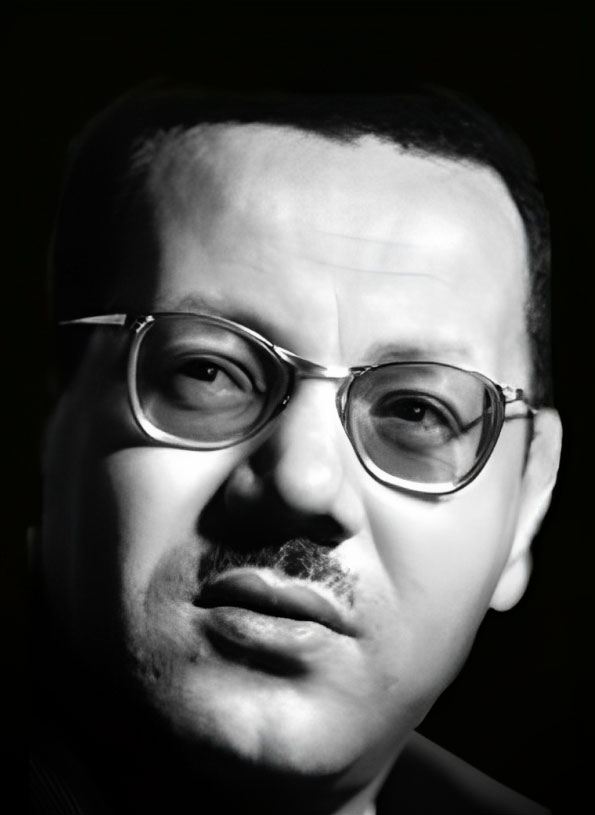
The undertaking was part of a broader conception of the struggle. Boussouf worked to give the Revolution the skills it needed to communicate, listen, gather intelligence and coordinate. In his account of the MALG’s origins, Dahou Ould Kablia, a former member of its services, describes an initial signals training course organised in August 1956: twenty-six young people were selected, and sixteen operators trained in Morse code were subsequently assigned across Wilaya V’s eight zones.
The same witness stresses that Boussouf sought skills even among legionnaires who had joined the ALN. Some foreigners took part in technical training; others contributed their expertise to weapons production. A man taken out of the enemy’s ranks could thus become an instructor.
These initiatives preceded the Ministry of Armament and General Liaison, whose acronym, MALG, did not appear until 1960. They reveal patient work in recruitment and training, undertaken while the war imposed its own urgent demands.
The deserters’ network also had to find its way through trial and error. Keller describes men who reached Morocco but became stranded for lack of money or a consular office able to repatriate them. Some ended up in prison; others were eventually handed back to the French. Escapees from Nador prison came to the FLN to protest their treatment. They had left a barracks only to end up behind another set of walls. That failure exposed a fundamental requirement: crossing the border could only be the beginning of the rescue.
This is where the organiser’s role becomes clear. The message’s credibility depended on what happened after desertion. Every successful return fulfilled the promise made to the next man. Every man abandoned, by contrast, risked destroying trust.
In Tétouan, the service had a house surrounded by a garden, where former legionnaires could wait to leave. They needed somewhere to stay, food and arrangements for the next stage. Psychological warfare also took this very practical form: a place to sleep and the possibility of going home.
Letters reaching into the barracks
To reach the soldiers, the network used their mail, among other channels. In West Germany, a meeting between Si Mustapha and activist Klaus Vack led, in 1960, to a campaign by the young members of the Friends of Nature movement in Offenbach.
Hundreds of letters were written by hand. To prevent a single point of origin from exposing the operation, they were entrusted to activists from different towns, who posted them separately. Some replied to personal advertisements placed by legionnaires seeking a female pen pal. A man expecting a romantic reply instead received an invitation to leave the war. Other letters used military postal addresses. This work is recounted in the Connection association’s dossier, which brings together the history and testimonies of these German supporters.
The method’s strength lay in its personal approach. The message entered a private space: that of the eagerly awaited letter and the connection to the country left behind. For the recipient, the question became tangible: could he still go home? Could he trust the people his unit was fighting?
Leaflets answered through examples. They showed men who had managed to leave. The network used accounts and photographs of homecomings to give its promise a human face. A former comrade who had returned alive could make credible what a general appeal could not.
Manfried Kober’s journey allows us to follow one such departure. On 14 December 1956, this legionnaire joined the guerrillas with twenty comrades, bringing their weapons and equipment. After being looked after for twenty-one days, the group reached southern Morocco, then travelled by boat from Ifni to Tétouan. In Madrid, the German consulate supplied the means to continue the journey: money, a passport and a plane ticket. This route was reconstructed by Jacques Follorou in Le Monde.
Behind that homecoming, we can make out the people whom a focus on Si Mustapha alone might obscure: the fighters who received the fugitives, those who escorted them, Moroccan intermediaries, European supporters and consular representatives. Success depended on those links working together.
An offensive on several fronts
The intended benefit went beyond reducing the enemy’s numbers. In her Arabic-language study of Si Mustapha, published in 2023, Amina Chaabouni emphasises the connection between the network’s work and the FLN’s international campaign. Former legionnaires could speak to the media about what they had experienced. Their accounts brought the Algerian war before European audiences that the independence movement’s own voice had far greater difficulty reaching.
The operation therefore combined several effects: taking fighters away from the French army, publicising the Algerian cause and showing that the FLN could make commitments to foreigners and then honour them. The underground organisation also presented itself as an interlocutor capable of acting beyond its borders.
This history was not, however, simply a succession of freely chosen departures. Studies also report coercive methods, including the abduction of legionnaires in Morocco. Acknowledging this helps us understand the nature of the operation: an undertaking of war whose methods were not all based on persuasion.
Si Mustapha himself became a target. Klaus Polkehn, who knew him, recounts an assassination attempt he survived on 26 March 1960 in Tétouan. In a café, a Spanish former legionnaire accompanying him opened a book received through the post. Müller spotted wires and made him close it. ALN specialists defused the device. Polkehn states that he later saw an X-ray of the booby-trapped book. The mail, used to reach into the barracks, had also become a means of reaching the organiser.
The most frequently cited tally records 4,111 legionnaires repatriated, including 2,783 to Germany. These figures, drawn from the service’s own account and reproduced by Connection, must be presented as such. They do not allow every desertion to be attributed to a letter or leaflet; they nevertheless convey the scale of an undertaking sustained over several years.
After independence, Si Mustapha continued his life in Algeria. Another landscape became associated with his name: the Djurdjura. Historian Malika Rahal recalls his role in developing the national park and training its forest guards. The man who had once organised departures was now helping to preserve a land that had become his own.
His story also casts Boussouf’s work in a concrete light. Recognising an unusual skill, finding it a place in the struggle and assembling the resources that would enable it to produce results: this is the organising ability revealed by the legionnaires’ escape network.
Reducing Boussouf and the men of the Oujda base to a “clan” obscures their contribution to the Revolution. Behind that label were training schools, intelligence networks, arms workshops and the ability to carry the struggle into the enemy’s own ranks. They had to recruit, learn, invent and bring together men whom everything seemed to divide. This collective achievement belongs fully to the history of liberation. Doing justice to Boussouf and his companions also means recognising the intelligence, tenacity and ambition they placed at the service of Algerian independence.
Loading…