Our first profile of Hamdane Khodja had a blind spot: we had not included scholarship in Arabic. By drawing attention to his son Ali Riza, Nadeem Ali Bey, @SidAliRais on X, exposed the effects of a documentary horizon confined to French. His warning was justified: how can we combat the erasure of Algerian history if we neglect some of the voices writing it?
Our research had reproduced this bias. His intervention led us to Algerian academic studies and a recent translation we had missed. It also brought us back to a book by Mostefa Khiati published in Algeria, in French. Language creates a barrier; our research habits erect another when they overlook work published in the country. This follow-up begins to address that omission.
A son on the road to Constantine
1832. Hamdane Khodja travels through the mountains between Algiers and Constantine. His son Ali Riza accompanies him. At the end of the journey is Ahmed Bey, whom the French authorities are trying to persuade to abandon resistance.
The father is travelling under duress. According to his son’s testimony, cited in Kheireddine Saïdi’s study, the French military used threats to secure this mission. Ali Riza would leave an account known in French as Souvenirs d’un voyage d’Alger à Constantine à travers les montagnes (Recollections of a Journey from Algiers to Constantine through the Mountains).
A father ordered to act as an intermediary for the conquering power; a son who observes and will later tell the story. Through this account, Ali Riza becomes a witness to Algerian history in his own right, leaving a written record.
A career shaped by the colonial rupture
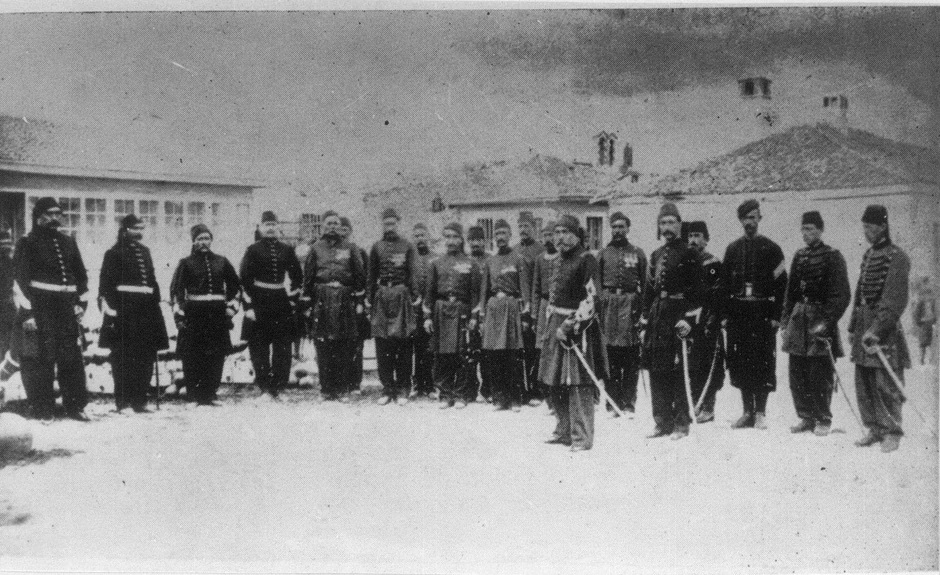
Ali Riza’s subsequent journey takes him out of Algeria. The report on the research of Subhi Adam Abdallah Adam, a Sudanese scholar, places him in Paris with his father in 1833. The Ottoman ambassador, Mustafa Reşid Pasha, helps steer him towards military training. Ali Riza then moves to Istanbul and joins the Ottoman army, before taking up governorships, notably in Tripoli and in the province of Hüdavendigâr, around Bursa. He dies in Istanbul in 1876.
His name retains his origin: Cezayirli, ‘the Algerian’. This designation accompanies a career pursued far from his country, along a path transformed by the French conquest and the dispersal of his family.
The fall of the government of Algiers in 1830 opens the way to a process of dispossession that Ahmed Bey and Emir Abdelkader will resist. Ali Riza’s life must be understood in the context of this rupture: colonisation takes elsewhere men who might have helped defend and govern their country. His Ottoman career cannot be detached from this upheaval and turned into evidence that Algeria lacked a political existence of its own.
The Algerian who governed Tripoli
The Algerian scholar Mostefa Khiati devoted a book to him, published in French in 2020. In his interview with Anadolu, republished by Turkpress, he describes a career as a soldier, diplomat and administrator.
In Tripoli, Khiati credits him with reforms affecting municipal organisation, water supply, sanitation and street lighting. He also mentions the opening of a school of arts and crafts. Behind the titles and ranks, an administration emerges that attends to a city’s practical needs: drinking water, education, getting around and access to public services.
Khiati also highlights his efforts to protect the Fezzan from French ambitions and promote reconciliation between Tuareg groups. His account thus goes beyond the portrait of a dignitary living far from his birthplace. It places Ali Riza within the urban transformations and Saharan struggles for power of the nineteenth century.
These responsibilities form one part of his story. His writings illuminate another: Algeria remains a subject to which he devotes his work.
Two men, two ‘Mirrors’
Ali Riza leaves a work entitled مرآة الجزائر, the Mirror of Algeria. In a study published in Arabic in 2018, Kheireddine Saïdi distinguishes this book from Hamdane’s Mirror. He notes the loss of the Arabic original and the transmission of the text in Ottoman Turkish and then modern Turkish.
The similarity of the titles has sustained confusion between two separate works. By distinguishing them, Saïdi restores the son’s place as an author. His research also reminds us that a text can survive in translation even when its original version can no longer be found.
The history of these books forces us to examine the transmission itself: the languages in which they circulate, the scholars who study them and the editions that make them accessible to readers again.
A return through Arabic
On 23 July 2025, El Chaab announces the publication of an Arabic translation of the Mirror of Algeria, translated by Kheireddine Saïdi and published by Khayal in Bordj Bou Arréridj.
According to this account of the edition, the book comprises eighteen chapters, the last devoted to the author. It addresses Algeria’s history during the Ottoman period, its foreign relations, the French invasion and the resistance of Ahmed Bey and Emir Abdelkader. It also discusses the violence of the conquest and the commitments broken after the capture of Algiers.
This publication gives the research a tangible outcome. It allows Arabic-speaking readers to rediscover a work whose history had been obscured by the loss of its original and the confusion between the titles.
We had overlooked this work of transmission. Acknowledging that omission commits us to changing how we prepare future articles: seeking out work in Arabic from the outset, identifying Algerian publications and cross-checking sources without making any single language the compulsory gateway to knowledge.
Hamdane and Ali Riza each left a book about Algeria. Reading the son means recovering another voice from this family scarred by the conquest: that of a man whose career continued elsewhere, but whose work brings us back to his country.
Loading…