What explains Algeria’s attachment to Palestine? Faced with the tragedy in Gaza, Algerian solidarity draws on a history familiar to Palestinians: that of a people who defeated settler colonialism after 132 years. Independence in 1962 gave them reason to hope. The FLN inspired Palestinian activists; independent Algeria provided them with political, material and military support.
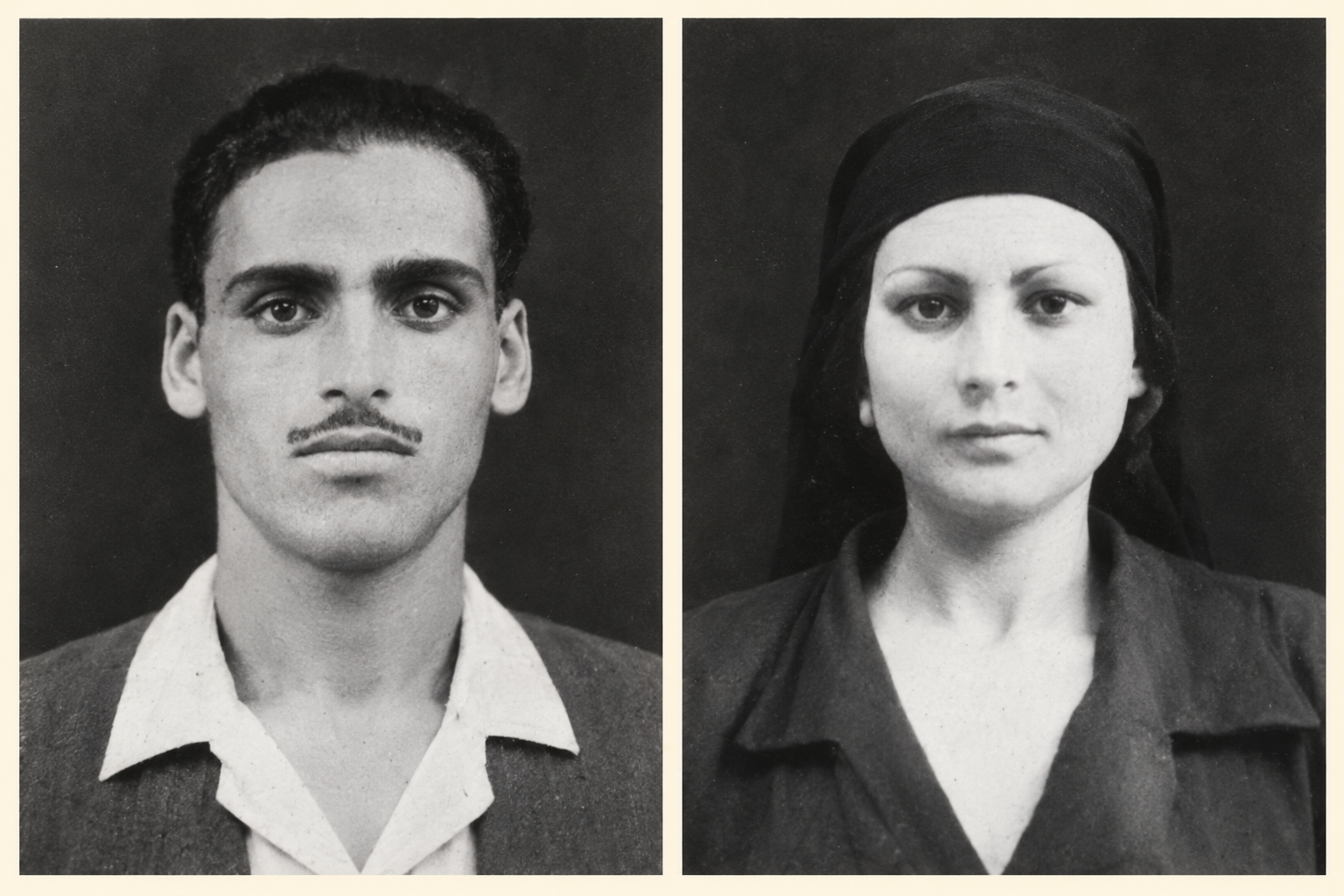
But the ties between the two peoples are more intimate still. To trace them, we must look at these family photographs, now archival records. A man and a woman, both born in 1925 in Hawsha, Palestine. In 1949, they are about twenty-four. Their village is behind them; they are now registered in Damascus. On their records, the French administration has preserved a trace of their Algerian origins.
At their age, they should have been able to think about building a life. These documents tell us what interrupted it. The country where they were born no longer offers them a home; the country of their ancestors survives in a line on an official record. To understand this double belonging, we must return to the families who left Algeria long before they were born.
Selling everything to take the children away
In 1888, Ali Naqasi leaves Tifra, in Kabylia, with his wife, Um al-Khair, and their five children. Several poor harvests have forced him to sell his possessions. He raises 375 francs, barely enough to pay for their sea crossing. Seven people leave with the proceeds of what they have just left behind.
Ali settles in northern Palestine. In 1896, a childhood friend writes from their village: how can he get there, and how much does it cost to live? Ali replies as a farmer. He writes about wheat, land granted by the sultan and the possibilities for cultivation. In the Arabic correspondence studied by Salma Hargal, relatives seek the information they need to decide their future. Some letters are intended to be read aloud. Those who can read pass on news from the Levant to the others.
One family’s departure can thus prepare the way for others. Distance interrupts neither questions nor mutual help. Information about crossings, land and relatives who have already settled circulates between the two shores.
These departures form part of the migrations caused by the French conquest. Throughout the nineteenth century, Algerian communities settle in Palestinian towns and villages. Emir Abdelkader, who settles in Damascus in 1855, plays a role in establishing these roots. But not all the migrants are former combatants: some simply want to feed their children and live beyond colonial rule.
A village where the children can grow up
Family names trace another map of Algeria. The Ouled Bou el-Warith from the Dellys area are found in Marus and Ammuqa. Aït Yahia families from the Tigzirt area live in Dayshum. Ouled Sidi Aïssa settle in Kafr Sabt; in Awlam, the settlers include Ouled Sidi Younès and Ouled Sidi Aïssa from Aïn Bessem and Bouira. The research of Mustafa Abbasi makes it possible to trace these kinship networks into the villages of Galilee.
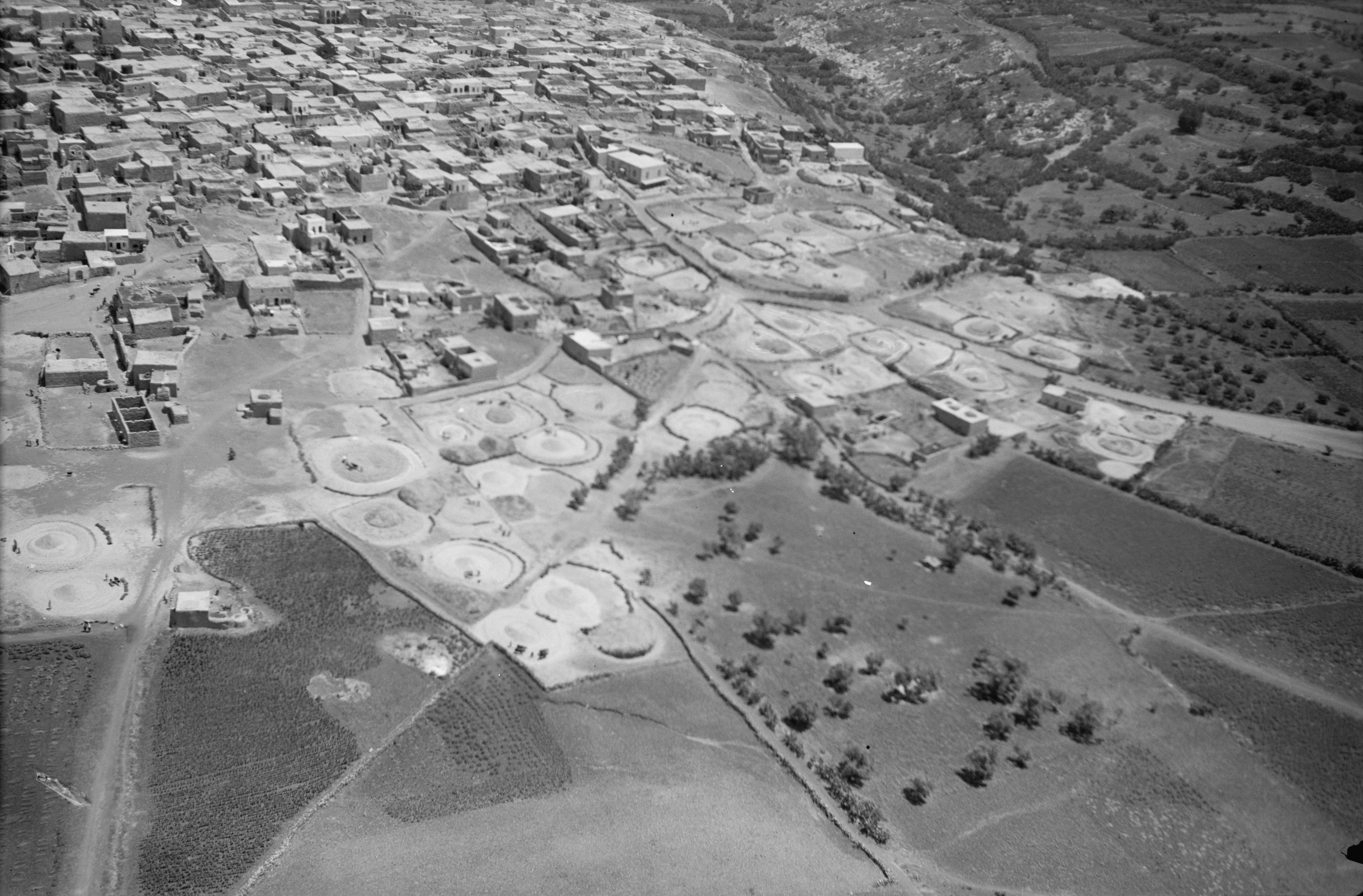
Around Tiberias, four localities are known as Bilad al-Amir, the “emir’s lands”. Their names predate the arrival of the Algerians, and they are also home to Palestinian families. Settlement takes shape through farming, exchanges with neighbours and marriage. Generations follow one another. Palestine becomes the country of childhood.
A testimony collected from a man from Kafr Sabt, Mahmoud Saleh Abdelkader Issa, preserves the memory of the burnouses worn by the first arrivals. These garments had intrigued those around them. Over time, styles of dress become closer to those of other inhabitants, and marriages with neighbouring villages multiply. Algerian origins endure, but are now passed down within families rooted in Palestine.
Mustafa, his wife and their two children
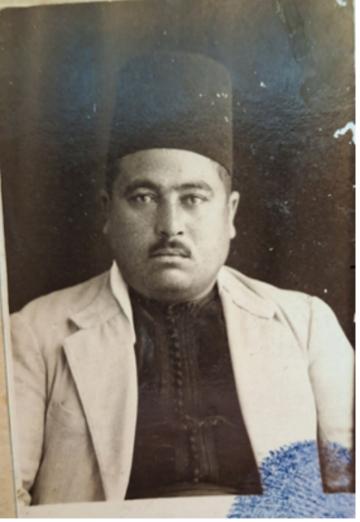
Mustafa Ben Taïeb el-Manoussi was born in Jaffa in 1895. In his consular photograph from 1933, he wears a light-coloured jacket and dark headwear. He looks into the lens. Fifteen years separate this image from the letter in which he will describe his plight.
On 13 November 1948, Mustafa writes to the French consul in Haifa. Driven from his home, he is with his wife and their two children in Bureij, in the Gaza Strip. He describes their “deepest misery”. His letter, uncovered by Yannis Arab, documents this Algerian presence among Palestinian refugees.
In other families, the loss of the village is accompanied by the loss of a name. The Arabic-language publication Hibr recorded the account of Khaled Omar, a descendant of the Ouled Sidi Aïssa whose name is a pseudonym. His family lived in Kafr Sabt before seeking refuge in Damascus after the Nakba. Their previous surname was Ben Aïssa. According to the account passed down by his parents, the name was changed in 1936, when his grandfather was wanted by the British.
This grandfather, born in Palestine, spoke Amazigh with his brothers. The grandchildren heard words they could no longer always understand. The village had been lost and the surname changed, but something of Algeria remained in family conversations.
Finding those who still remembered
Khaled will make the journey to Algeria to find his relatives. There he meets a relation of about ninety, who had heard his father speak of the ancestors who emigrated. He had not known them, but could nevertheless testify to their departure. This family memory will contribute to Khaled’s effort to have his Algerian nationality recognised.
His father and grandfather, he explains, had not wanted to take this step: they felt Palestinian above all. He himself expresses both identities. One comes from the country where his family had made its life; the other from a history still alive enough to lead him to seek relatives he had never met.
This story extends beyond Palestine. Colonialism scattered Algerians across the Muslim world, as far as Anatolia and the Hejaz. Some fled repression, others dispossession or poverty. The circumstances of departure differed; family ties, names and correspondence helped sustain an attachment to Algeria despite the distance.
What became of these families? What memories have they kept, what letters, what photographs? Their archives are also part of our history. Finding them would help us understand what colonialism scattered, and what families managed to pass down.
Loading…